

ETHIOPIA – Shantawene
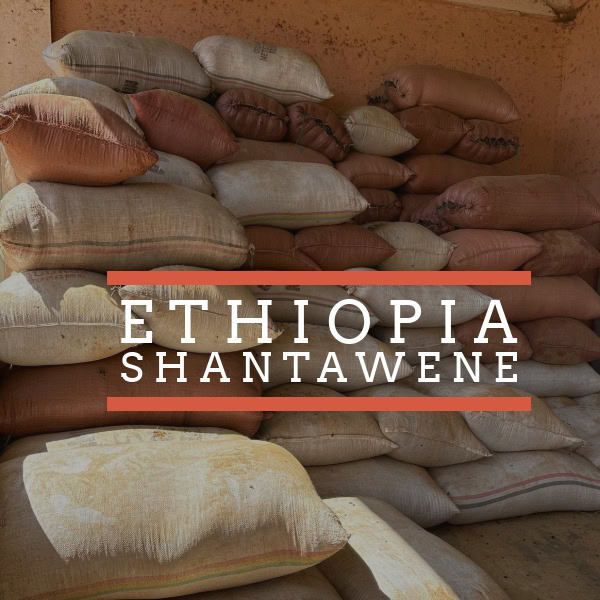
In February 2026 Brock & Jacob went to Ethiopia and visited this village to see the small lots, and washing station. They were blown away, not only by their farm, but by the scale of their washing station operation. Incredible attention to detail, which leads to incredible coffee quality.
Region: Shantawene Village, Sidama Zone
Altitude: 1990 – 2190 masl
Coffee varieties: Heirloom varieties
Process: Washed
Drying: Dried over 8 – 12 days
Cupping notes: Apricot, Honeysuckle, Melon
Cupping score: 87
Harvest: 2026
Roasted on: Joper CRS30
Release date: 09/10/2026
PREPARATION ANALYSIS
ESPRESSO & Mokka Pot
Rating: 7.25/10
Why we like it:
If you like floral espressos that cut through milk, this coffee is for you. We love it our hopper at the roastery, and the fact that we were at the farm, really adds to the enjoyment of it.
Espresso recipe
Dose: 20g
Yield: 35g
Time: ~31 seconds
Essential Espresso tips
- The above recipe is what worked for us. We encourage you to play with grind, dose and yield as water composition changes all over Ireland which greatly affects the way coffee extracts into water. Note that water temperature, grinder blade quality and espresso machine pressure also have a part to play.
- For a home machine, use the largest dose your basket comfortably allows. As a starting point, try 12g in → 24g out, using a ratio of 1:2 at first, then more or less to your liking.
- Different coffees grind differently, always adjust your grind for a new coffee so the espresso pours slowly and consistently, just off the drip which should take 25-30secs. The longer coffee is exposed to air the finer you will need to grind your coffee.
In the cup:
Espresso: Light-to-medium silky body, high vibrant acidity, high honey-like sweetness
With milk: Works beautifully in a short cortado or flat white, adding a sweet, fruity zest to the dairy.
FILTER: Cafetiere · Aeropress · Drip · Pour Over
Rating: 8.75/10
Why we like it:
A stunning washed Ethiopian that showcases floral & tropical flavours in the cup.
Brew Vessel: v60
Dosing recipe: Use a ratio of 16g coffee / 250ml water
Brew time: 2.30 minutes
Essential brewing tips
- If you want more or less water then vary the coffee to keep a ratio of 60g/litre.
- Having said that, the above recipe is what worked for us. We encourage you to play with that ratio as water composition changes all over Ireland which greatly affects the way coffee extracts into water. So does water temperature, grinder blade quality and the brew vessel used.
- Different coffees weigh differently. We highly recommend using scales to weigh the coffee and the water – it’s like baking a cake, you wouldn’t guess the ingredients.
- Keep the coffee in contact with the water for around 2.5–3 minutes. Just like tea, longer brew times can introduce unwanted bitterness. If you have a drip through device (like a v60) then try medium grind. When using full steep methods such as Cafetiere use a coarse grinder and minutes brew time.
- Always adjust to taste and play around with the grind size, dose/volume, water temp & yield. Too much of something makes it bitter, too less has no flavour.
In the cup:
A light, tea-like body packed with elegant aromas of honeysuckle, followed by a bright, clean acidity of apricot and melon. This coffee is stunning when served strictly black and let to cool.
ABOUT THE FARM / ORIGIN
In 2006, brothers Asefa and Mulugeta Dukamo founded Daye Bensa, a coffee grower and exporter in Ethiopia. Daye Bensa exports coffee from its farm, in the Shantawene Village
This Shantawene coffee is named after the village, where the majority of the people, many of them women, work on the coffee farm. Daye Bensa is at 1990–2190 meters
Daye Bensa owns 15 washing stations across three districts that handle all the coffee they export. All farms are certified in organic and C.A.F.E. practices and are working on additional certifications.
Nearly 1,000 farmers gathered to celebrate their harvests and to receive second payments for their coffee cherry contributions. Daye Bensa additionally rewarded the top three farmers from each of the three villages with certificates and cash prizes, recognizing them for consistently delivering high-quality cherries. Going forward, Daye Benesa is hoping to work with more farmers, to particularly encourage women farmers and to work with Hawassa University, to help students perform research to improve coffee quality.
Reviews
There are no reviews yet.